You've Done Everything Right. And It's Still Not Enough.

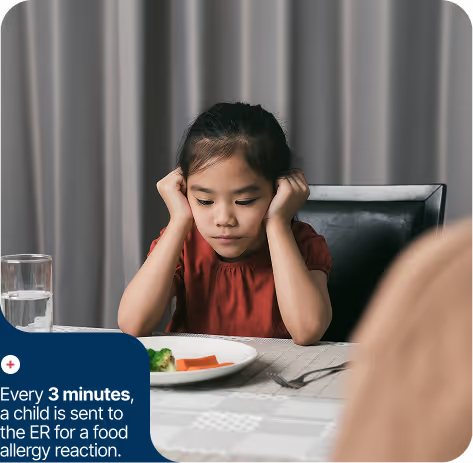
You read every label. Pack safe lunches. Call ahead to every restaurant. You've said no to birthday parties, sleepovers, and summer camps.

You carry EpiPens everywhere.

You've trained teachers, coaches, and grandparents.

You've memorized the signs of anaphylaxis.

And still — every meal feels like a risk.

What if there was another way?
The Iyer Family Story

Watch the Iyer family’s Food Freedom Story.

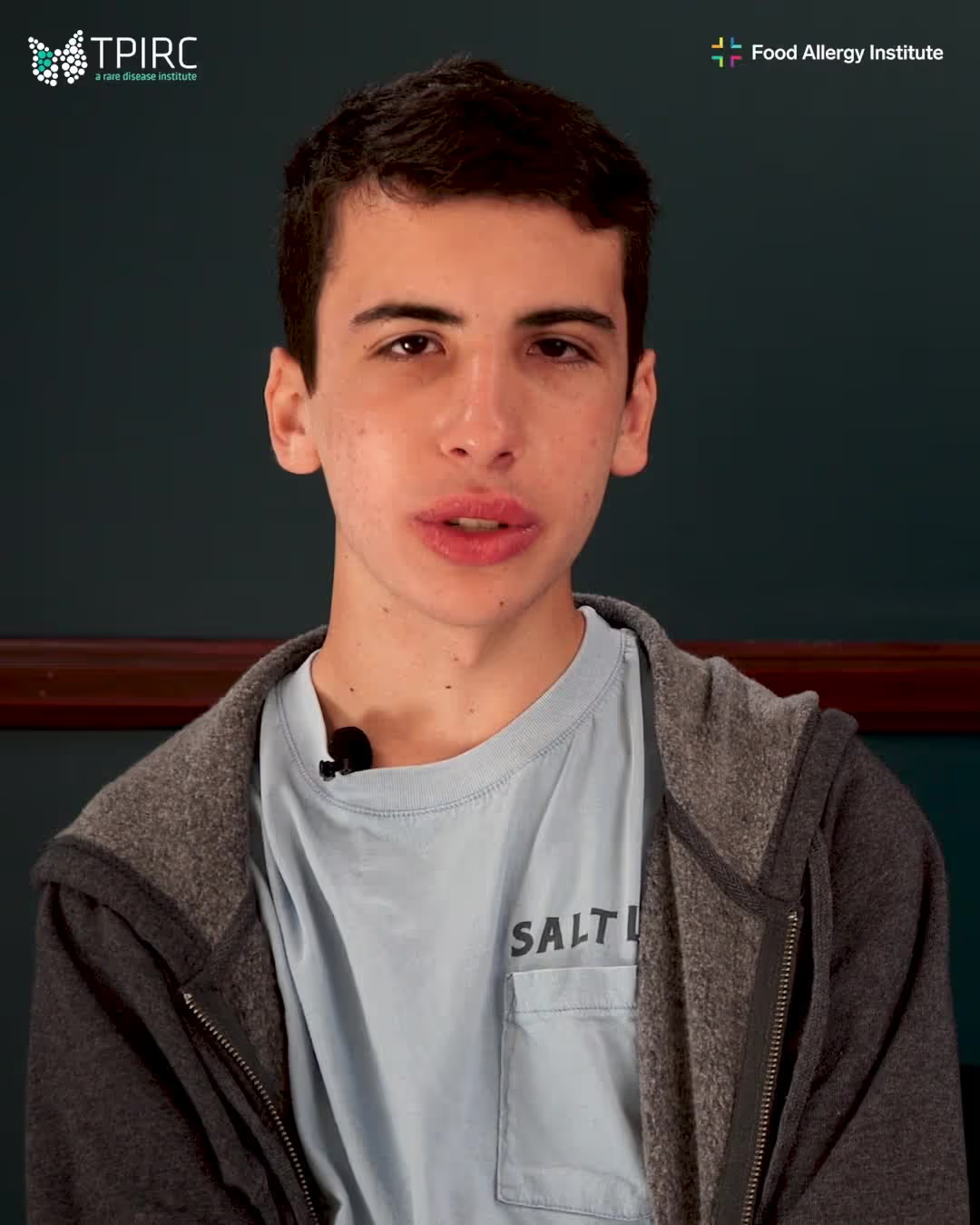
“There will be other challenges, but food is not one of them” 

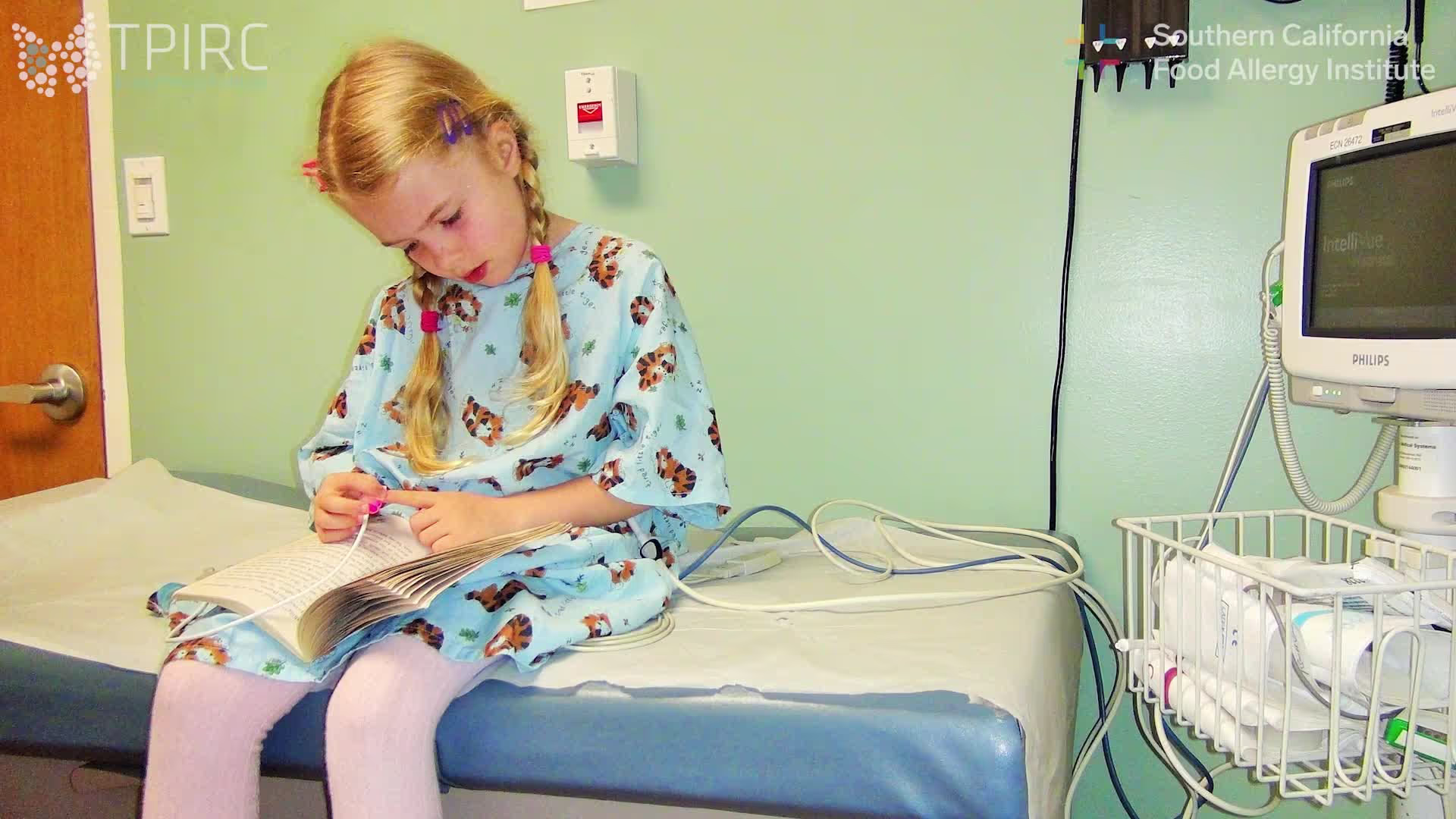
For the last two years, TIP graduates Avni and Dia Iyer have been enjoying a non-allergic life without the constant burden of food allergies. Avni and Dia enrolled in the Tolerance Induction Program (TIP) to overcome their allergies to tree nuts, peanuts, sesame, and seeds.

Introducing the Tolerance Induction Program (TIP)

The only food allergy treatment designed for complete remission —so your child can eat whatever they want, whenever they want,in any quantity.

56,000+ Food Challenges

TIP       Oral Immunotherapy

Traditional treatments teach tolerance to ONE food and require LIFELONG daily dosing.

TIP retrains the entire immune system and ends with TRUE REMISSION — no daily dosing, no fear.

TIP offers a safe and lasting solution for those:

18 months to 25 years old

With a history of food anaphylaxis

Managing multiple food allergies, including the Top 9

With underlying health conditions (Asthma, Eczema, EoE)

Disqualified from other allergy treatments

See If TIP Is Right For Your Family →

Your Path to Food Freedom

Our 24/7 Command Center supports you every step of the way.You're never alone in this journey.

01
5 min

Qualify

Complete a short assessment to confirm your child is a candidate for TIP.

02
30-minute call

Consult

Speak with our enrollment team to discuss your child's allergies, answer questions, and plan next steps.

03
1-2 day visit

Diagnose

Visit our clinic for comprehensive immune mapping.

We analyze 200+ data points to create your child's personalized treatment plan.

04
2.5-4 years

Treat

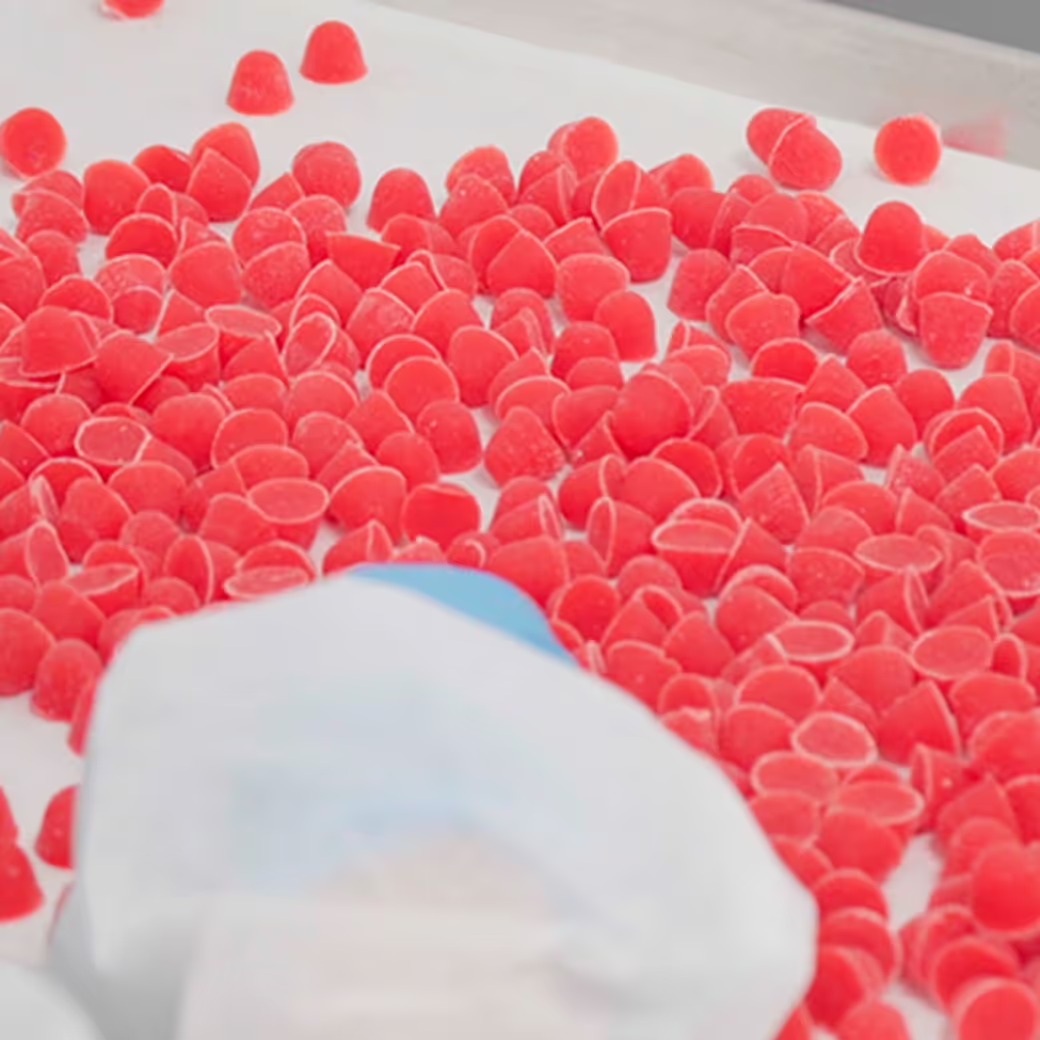
90% of the program happens at home with precision gummy dosing.

Clinic visits every 6-12 weeks depending on your location.

05
Ongoing support

Qualify

Graduate to once-weekly maintenance, then decreasing over time.

Your child eats freely — for life.

Start With Step 1 →

They Got Their Lives Back

Factor
Goal
Allergens
Daily Dosing
Reaction Rate
Location
Post-Dose Rest
Support
Personalization
TIP
True remission (eat freely)
Treats ALL allergens together
Ends at remission
<1% needing epinephrine
90% at home
Not required
24/7 Command Center
AI-driven individual plans
Traditional OIT
Desensitization (manage reactions)
One allergen at a time
Required for LIFE
10-15% needing intervention
Weekly clinic visits
2+ hours after every dose
Office hours only
One-size-fits-all protocol

See If TIP Is Right For Your Family →

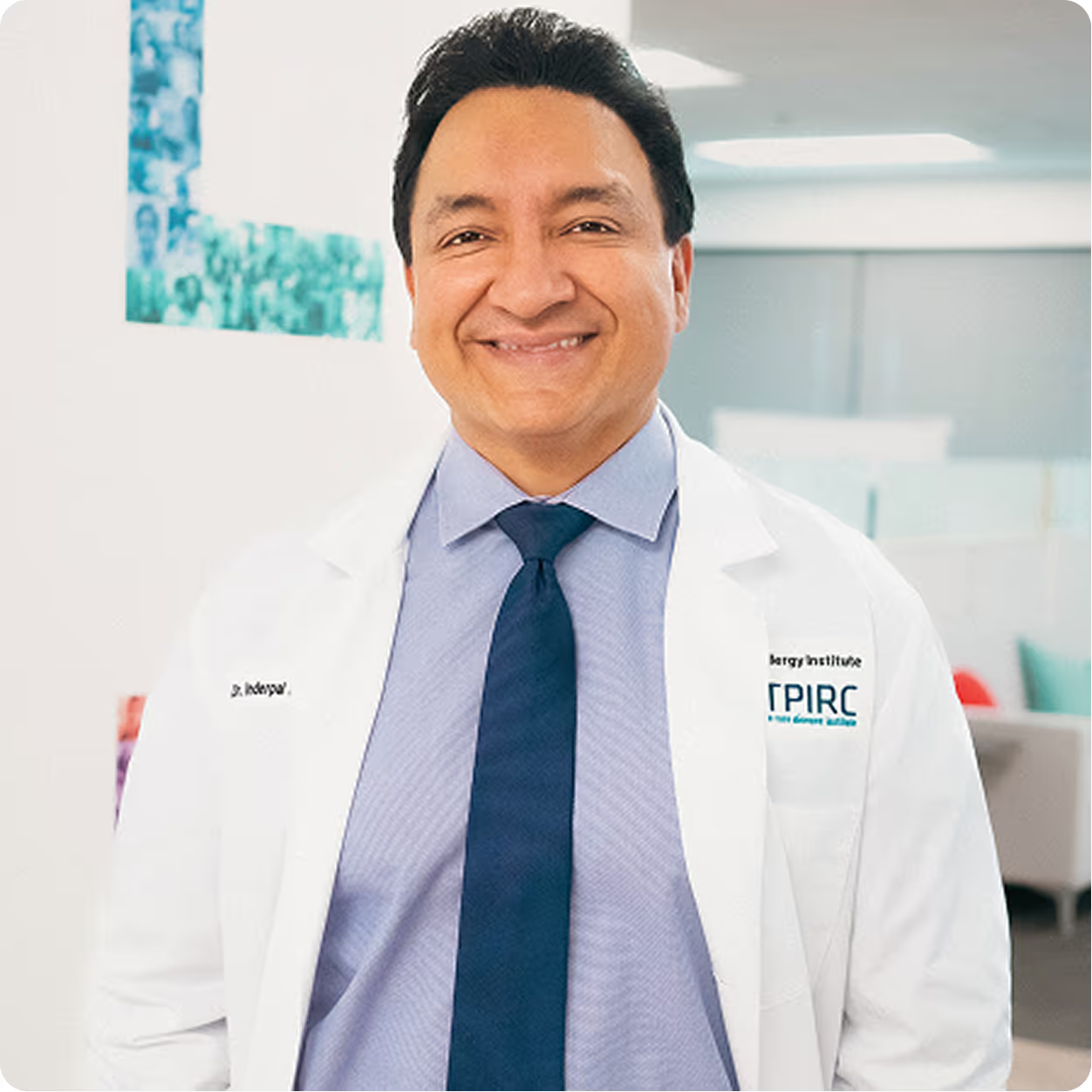
Dr. Inderpal Randhawa

Founder & CEO, Food Allergy Institute

Dr. Randhawa is a board-certified allergist who has dedicated20+ years to solving what traditional medicine said was unsolvable:
true remission from food allergies.

He developed the Tolerance Induction Program using AI-driven diagnostics and precision medicine — an approach now trusted by 10,000+ families worldwide.

"Every child deserves to eat without fear. That's not a dream. It's what we do every day."

About Dr. Randhawa

Board-Certified Allergist & Immunologist

100+ Published Research Papers

Speaker at AAAAI & ACAAI National Conferences

Founder of the world's largest food allergy treatment center

Real stories from real people

Staff is kind and friendly. Rosie is the best!  Program very organized and treatment very calculated. We are just getting started but my teenage son feels very comfortable that he’s in great care and excited about the results.

Denise Poole

Latasha and karina They helped my son today and they were very patient and kind and I am really grateful for their job.

Carolina Villalba

This has changed my daughter’s life forever. Most skilled and professional medical staff! Well oiled machine!

Alexa Gibson

We’re a few visits into TIP and things have been going pretty well. It’s a marathon but doable, and the hope for food freedom is indescribably motivating.

Ben Cannon

I loved it 💕 the staff were very attentive, even better 👍 …

Seidy Castillo

We have always experienced quick but thoughtful replies to our emails, etc... We really don't have complaints.

Marry Marshall

I highly recommend anyone who has a child with severe food allergies, contact the Food Allergy Institute to get started. You won't regret it!

Sherry LaMaison

I have been in full  remission for over a year now from only 3 years in the program

Evan Frechette

They are a great team and a huge asset to the company, along with the many others behind the scenes who have helped us on this journey.

Jeanette Cruz

We’ve been going here since Aug 2020 and my son has cleared over 15 nuts and seeds that we had allergic reactions to.

Kaley Charlet

Insurance Carriers

What is TIP?

Faq Question Open Icon

TIP is a precision-medicine approach to treating food allergies – this means that every child in our program receives an entirely unique form of therapy. The Food Allergy Institute is built on molecular data. As of 2025, the Institute has stored over 200 trillion data points from anaphylactic patients in TIP. Through our data-driven Tolerance Induction Program™ we build safe, customized treatment plans that are unique to each patient’s allergic profile and data markers. Through this personalized approach, our patients achieve the freedom to eat whatever they want, whenever they want, in any quantity.

What are the allergens the TIP can treat?

Faq Question Open Icon

The Tolerance Induction Program™ (TIP) successfully treats ALL IgE mediated food allergies, including 

the TOP 9 major allergens and complex cases.

  • Peanuts
  • Tree Nuts
  • Milk
  • Eggs
  • Shellfish
  • Wheat
  • Soy
  • Fish
  • Lentil
  • Mustard
  • Sesame
  • And more

How is TIP different from OIT?

Faq Question Open Icon

TIP is a safer, more comprehensive approach designed to achieve true remission, not just desensitization. TIP reconditions the immune system using a personalized, data-driven method that treats multiple allergens simultaneously. With advanced diagnostic testing, immune profiling, and biosimilar food introduction, TIP minimizes reaction risk while leading patients toward long-term tolerance and food freedom.

Unlike OIT, which requires lifelong daily dosing and rest periods after each dose, TIP is designed to lead patients to true remission, eliminating the need for constant maintenance. 90% of TIP happens at home reducing appointment frequency utilizing safe and accurate gummy dosing. In addition, TIP uses a personalized, data-driven biosimilar immunotherapy approach that gradually retrains the immune system, reducing reaction rates. At the completion of the program patients can safely incorporate foods into their diet without indefinite dosing or avoidance.
The three primary differences are:

Foundation: TIP is based on diagnostics and data analytics leading to a precision medicine approach to treatment. Each child’s data determines their unique treatment plan.

Methodology: TIP utilizes a concept we call “protein matching.” This allows us to treat the entire allergic profile.

Outcome: The goal of TIP is for each patient to achieve true food freedom. Once in remission, TIP patients can tolerate large and infrequent doses of their allergens allowing them to maintain a normal diet without restriction or fear of reaction and can consume unlimited amounts of the foods to which they were once allergic.

What are the main clinical differences between TIP and OIT?

Faq Question Open Icon
  1. Safety – TIP is designed to be safer, minimizing reaction risk through a data-driven, personalized approach, whereas OIT carries a higher risk of allergic reactions due to direct allergen exposure.
  2. Treatment Goal – TIP aims for true remission, allowing patients to eat freely without ongoing maintenance, while OIT focuses on desensitization, requiring lifelong daily dosing to maintain tolerance.
  3. Personalization – TIP uses AI-driven immune profiling to customize treatment for each patient based on biomarkers, whereas OIT follows a standardized protocol for individual allergens.
  4. Multi-Allergen Treatment – TIP treats multiple food allergies simultaneously, while OIT typically targets one allergen at a time.
  5. Diagnostic Testing & Monitoring – TIP relies on advanced diagnostics (IgE, IgG4, skin prick, basophil activation tests) to track immune shifts, while OIT has limited ongoing immune monitoring.
  6. Dosing & Lifestyle Impact – TIP eliminates lifelong dosing and rest periods, allowing a more flexible lifestyle, whereas OIT requires strict daily dosing and activity restrictions.
  7. TIP offers a safer, more advanced, and personalized path to food freedom compared to OIT’s desensitization-based approach.

How long does it take to complete TIP?

Faq Question Open Icon

There are a number of factors that determine the length of treatment. Age, severity of allergens, type of allergen, family history, health history, etc. are all considered when designing the patient’s unique protocol. At the end of the second visit, we will have a clear road map of how long your patient’s treatment length will be. Generally, the average duration of treatment is approximately 2.5 - 4 years, but the specific time frame varies based on the results of the AI diagnostic testing for each individual.

What would make me NOT a candidate for TIP?

Faq Question Open Icon

TIP is for patients with IgE-mediated food allergies, regardless of severity or preexisting conditions. Ideal candidates include children and young adults with multiple food allergies or a history of severe reactions, seeking a long-term solution beyond avoidance.

What is the age range for TIP patients?

Faq Question Open Icon

Currently TIP is open to patients aged 18 months to 25 years of age. Regardless of age, our success rate remains the same, and we will continue to offer secure, sustainable and successful treatment to all patients with food allergies up to the age of 25. 

Patients between 25 to 50 years of age are asked to to fill out our Adult Cohort Form which will start accepting patients in March of 2026

  • From the patient/parent perspective, the primary factor for success in TIP is compliance. 
  • For younger patients, a limiting factor may be that the child does not eat consistently. 
  • For older patients, anxiety may be a limiting factor. We do recommend that parents consider the daily dosing commitment that the program requires and the patient’s ability and/or willingness to comply.

*TIP has successfully treated patients ranging in age from 6 months to 40 years of age. Patients under 18 months of age are encouraged to to fill out the enrollment form and will be queued as they reach the requirement age. Patients over the age of 25 are encouraged to fill out the enrollment form; patients will be notified when the program opens to their age group and/or referred to the LAHA Medical Group.

How does AI play a role in TIP?

Faq Question Open Icon

AI powers TIP by analyzing vast patient data to create highly personalized treatment plans. Using a machine learning algorithm designed by Dr. Inderpal Randhawa, AI evaluates diagnostic results, immune profiles, and past patient outcomes to optimize food introductions and ensure the safest path to remission. This data-driven approach continuously refines treatment protocols, improving precision, safety, and long-term success.

How much does TIP cost?

Faq Question Open Icon

The Tolerance Induction Program (TIP) costs $979 per month if paying cash, which includes TIP fees, diagnostic testing, and clinic visits. We also accept insurance and are in-network with all major PPO carriers in California, with out-of-pocket costs typically ranging from $400 to $700 per month ($5,000 to $8,500 per year), depending on coverage. FSA and HSA can be used for payment.

Financial Responsibility for Tolerance Induction Program™ is broken into four (4) separate fees or  a flat-rate, all-inclusive monthly plan for cash-pay patient one simple monthly subscription price $979

TIP FEE  (This fee is an out-of-pocket expense and not billable to insurance)

The Tolerance Induction Program Fee is $1,320 per patient, per quarter ($5,280 per year) for every quarter that the patient is in the program. This amount can be paid in full via a one-time, annual payment or in quarterly installments, with the initial payment due at the time of scheduling the first appointment.  This fee is not inclusive of any office visit, diagnostic testing, or SLIT fees or any corresponding co-pays or deductibles billed to the patient’s health insurance provider.

100% of TIP fees are reinvested into the advancement of the treatment  program by providing predictive data analytics for treatment plan development, food protein and gummy preparation for at-home dosing, 24/7 on-call providers, customer service call center, software development, AI architects, data scientists, and a host of other medical and administrative personnel needed to make this extraordinary, groundbreaking medical treatment possible.

Reach the FAI Billing Team by contacting us at:

562-490-9900 Option 4 (Billing), Option 1 (TIP Fee Billing)

Email: patientbilling@tpirc.org

Salesforce Case Queue: Patient_Billing

CLINICAL FEE (billable to insurance)

Each daily clinical visit will have an associated provider visit and/or diagnostic fee. Daily visit fees are billed at the rate of $435 ($240 Specialty Visit + $195 Food Challenge) + any associated diagnostic testing fees.  During these visits, the provider will perform a physical examination, food challenge and diagnostic tests as medically necessary. Copayment is due at time of visit.

Visit series are on average:

Zone 1 (Pacific + Mountain Time Zone + Arizona) every 6- 8 weeks for 1 - 2 days of appointments. (6 Trips)

Zone 2 (Central + East Time Zone + Alaska + Hawaii) every 10 - 12 weeks for 2-3 days of appointments.  (5 Trips)

Zone 3 (International) every 12 - 14 weeks for 3-5 days of appointments. (4 Trips)

*These fees are separate to and not included in the TIP or Foundation Labs Fee, and are billable to insurance.

* HMO and out of network patients will require an authorization to avoid a cash rate.

*Any dietary enhancements purchased at the time of visit are billed separately and not billable to insurance.

*Notice: SLIT (sublingual immunotherapy) is billed separate and not billable to insurance. 

To reach the FAI Billing Team by contacting us at:
562-490-9900, option 4 (Billing), option 3 (Clinic Billing)

Email: patientbilling@tpirc.org

Salesforce Case Queue: Patient_Billing

TPIRC Diagnostic Services / Foundation Labs Fee (partially billable to insurance)

Laboratory Fee is not included in the TIP or Clinical fees. These are separate services performed by Foundation Labs, exclusively. Comprehensive labs are performed on average every 10 -15 months or as deemed appropriate by the provider for the management of your child's care plan. A minimum lab visit deposit is required for every blood draw.

  • PPO / MediCal / Medicaid: $500
  • HMO / Kaiser / Self / Cash Pay: $1,000
  • International Patients: $2500

Foundation Labs is a CLIA Certified, high complexity laboratory focused on supporting the diagnostic requirements for the Food Allergy Institute’s Tolerance Induction Program™ (TIP). Foundation Labs is currently the only diagnostic facility that is able to perform the complete set of tests necessary to develop and maintain the treatment plans utilized in the Tolerance Induction Program.

* Foundation Labs is out-of-network with all major insurance plans. 

* The maximum out-of-pocket cost to our families per blood draw is $2500.00.

Billing services are provided by Change Healthcare: 866-500-9722 

Reach the FAI Billing Team by contacting us at:

 562-490-9900, option 4 (Billing), Option 2 (Foundation Labs Billing)

Email: billing@foundationlabs.org

Salesforce Case Queue: Foundation_Labs_Billing

SLIT FEE  (This fee is an out-of-pocket expense and not billable to insurance, * not required for all patients)

$298 – $338 Quarterly (every 3 months, if needed)

SLIT stands for Sublingual Immunotherapy. It treats the underlying cause of allergic reactions and is designed to gradually desensitize the immune system to specific environmental allergens. If your child is instructed to enroll in SLIT prior to or during Tolerance Induction Program™ (TIP), it is a requirement if you wish to continue the Tolerance Induction program.

Reach the FAI Slit Team by contacting us at 562-490-9900, option 6

Email: slit@tpirc.org

Salesforce Case Queue: Slit_Orders

Is my TIP deposit refundable?

Faq Question Open Icon

The deposit is refundable up to 10 days after the initial onboarding appointment should the patient decide not to move forward in the program or they are identified as not being a candidate for treatment.

If I decide to drop out of TIP while in the middle of treatment, will I still be financially responsible for anything?

Faq Question Open Icon

You will not be held financially responsible if you decide to remove your child from the treatment program other than for treatment and plan.

If I leave the program and decide to continue, how long can I rest without repeating the treatment process from the beginning?

Faq Question Open Icon

Each patient and plan are fully customized, this would be discussed at the time of pause or discharge and a plan created.

Do you have a list of insurance companies that you accept?

Faq Question Open Icon

We accept various HMO and PPO insurances. It is best for the patient/family to contact their insurance provider directly and provide them with the following information or submit an insurance verification form on our website: https://foodallergyinstitute.com/insurance-verification

Aetna, Meritain Health (Aetna), Cigna, Health Partners (Cigna), Blue Shield of California, Anthem Blue Cross of California, United Healthcare, Oxford Health, UMR, Health Net of California, Multiplan, First Health, Blue Cross Blue Shield (Outside of CA)

TPIRC Medical Foundation, Inc.

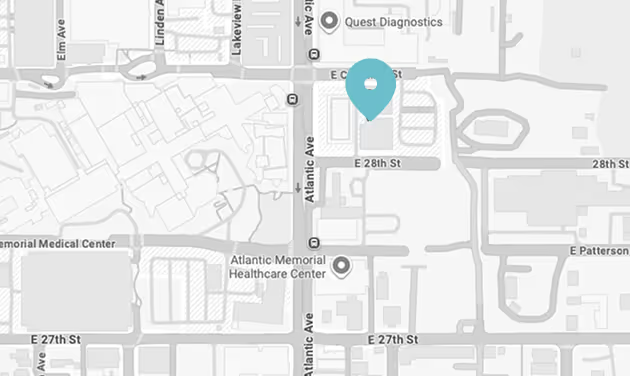
701 E. 28th Street, Suite 419 Long Beach, CA 90806-2759

NPI: 1225611312

Tax Id: 86-3638185

Salesforce Case Queue: Clinic_Authorizations / Patient_Billing / Insurance_Eligibility_Benefits

Email: patientbilling@tpric.org, cliniciauthorizations@tpric.org,

To reach the FAI Billing Team  by contacting us at 562-490-9900, option 4.

How can I apply for a grant or travel assistance?

Faq Question Open Icon

For grant information it can be found here https://foodallergyinstitute.com/resources/guides/grants/

Flights: Miracle Flights

https://miracleflights.org/

Lodging: Ronald McDonald House from $25 per night 

Long Beach https://www.rmhcsc.org/longbeach

San Diego  https://rmhcsd.org/

Bay Area https://rmhcbayarea.org/

Are there any food allergies too severe for TIP to treat?

Faq Question Open Icon

No. At the Food Allergy Institute, we treat the full spectrum of food allergens, regardless of their severity.

Do you have vegan options for treatment?

Faq Question Open Icon

Not at this time. Gummies are beef gelatin based and required for the program. 

  • For certain allergies doses are required to be given in Gummy form. 
  • Gummy dosing is not optional. Gummy doses are a component of quality control and part of the TIP program. 
  • Preferences to avoid sugar and/or food dyes are not approved exceptions.
  • Please be advised all gummies are beef gelatin based, no exceptions. If the consumption of animal products is necessary to ensure the patient safely reaches tolerance, we may ask the patient to consume animal products.  For religious purposes, patients are asked to request an exemption from their religious leader. 

*In some cases patients with severe beef allergy will not be on gummies until successfully clearing their beef allergy with microdosing of the actual protein. This is determined on a case by case basis.

Have there been any fatal reactions to a patient while dosing in TIP?

Faq Question Open Icon

No. In over 1 million food challenges and over 50 million home doses, less than 1% of patients have administered epinephrine. Reactions are rare, but we are prepared at all times. Each family is equipped with an anaphylaxis plan and our 24/7 emergency assistance is here to support you every step of the way.  Safety is our top priority. Reaction rates are posted publicly on our website: 

https://embed.domo.com/embed/pages/mOzJr

In TIP is there a daily waiting period that doesn’t allow for exercise/hot baths after any doses?

Faq Question Open Icon

During Launch: Launch day 1, a patch that contains physical food allergens will be placed on your child's back. This enclosed patch will remain on your child's back for 24 hours. This allows us to assess how your child's GI tract reacts to various allergens. Please keep the patch clean and dry, avoiding bathing and any heavy activity or sweating during the test.

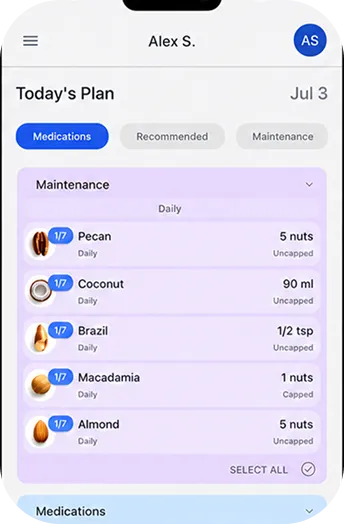
During treatment: Maintenance foods are usually taken in the morning on a daily basis. Recommended foods, such as the fruits and legumes that share similar proteins to your child’s allergens, should be dosed in the afternoon as a snack, generally 3-5 times a week. Treatment foods are generally dosed daily in the evening and followed by a 60-minute rest period.

Will my child or children have to continue dosing their allergens on a schedule for the rest of their lives after completing TIP?

Faq Question Open Icon

No. Completely unique to FAI, the molecular testing done at our organization allows us to understand the relationship between your child’s immune system and the proteins in the different classes of nuts. What does this do for you? For example, if your child is allergic to walnuts, pecans, and hazelnuts, they only have to eat one of them to maintain safety for all three. We call this food an “umbrella food” – a food which houses the most complete set of food proteins to which your child is allergic. Eating the proper amount of the umbrella food will protect your child from a larger group of related allergens.

  • Remission patients will have a minimum dose of the lead food in each of their allergen groups that will drop down in frequency over time. This minimum dose will be required indefinitely to ensure your child’s ongoing tolerance and ability to freely eat. The program is designed to move your child into deeper and deeper states of tolerance, though large and infrequent exposure to their once most allergic foods. Regularly scheduled remission visits will adjust dosing schedules over time.

Will my child's food allergies go away completely after completing TIP?

Faq Question Open Icon

By maintaining compliance within the program’s provisions, our patients have successfully sustained long-term tolerance with a near-perfect success rate. Our initial graduates have been out of the program for more than a decade and continue to enjoy deep tolerance and true food freedom.

What is the success rate?

Faq Question Open Icon

Over 10,000 + patients have reached remission. In 2025 Three patients every day will successfully reach Food Freedom.

What is TIP Remission?

Faq Question Open Icon

Remission is the absence of signs or symptoms of a disease process. TIP Remission is a state of immune unresponsiveness with once-weekly protein exposures. This simply means that your child will essentially eat like a non-allergic person.

  • Annual Remission Visit - Like all other medical conditions, it is important to have annual checkups to ensure that your child's tolerance levels are on the right track. These visits ensure that all of your hard work, time, and investment into food freedom lasts a lifetime. If consuming your child's prior allergen weekly is going well, there is a good chance we can space out your dose intervals to every two weeks and beyond once their body is ready. It is still important for your child to continue consuming their dosing/allergens, since we want them to maintain their state of immune unresponsiveness. 

Lifelong Remission - Our journey with you doesn't end in reaching Remission. We are committed to keeping our patients in Remission for life. That means we will continue to follow patients for the rest of their lives to ensure that they stay in Remission. We are committed to lasting Food Freedom for all of our patients.

Can we have testing done in another lab besides Foundation Labs?

Faq Question Open Icon

We operate our own diagnostic laboratory to ensure the highest level of accuracy and consistency in testing, which is essential for developing and maintaining highly individualized treatment plans in the Tolerance Induction Program. Our lab provides clean, verifiable data required for our AI and machine learning systems—without precise data, these systems cannot generate the personalized treatment plans necessary for successful immune modulation.

The testing for Tolerance Induction Program™ (TIP) is unlike any other testing you have completed in the past. Due to the complexity of our diagnostics process and the importance of your child’s data in the design of their unique treatment protocol, we cannot rely on results or records from any previous blood work or skin test. Our program is based on accurate, consistent and accountable testing methods. As such, we cannot rely on testing or results performed outside of our diagnostic model.  

Foundation Labs is a CLIA Certified, high complexity laboratory focused on supporting the diagnostic requirements for the Food Allergy Institute’s Tolerance Induction Program™ (TIP) . Foundation Labs is currently the only diagnostic facility that is able to perform the complete set of tests necessary to develop and maintain the treatment plans utilized in the Tolerance Induction Program.

Does any other clinic offer what you offer?

Faq Question Open Icon

No. We are the only food allergy treatment center of its kind in the world.

How often will I be in and out of the clinic if I am out of state?

Faq Question Open Icon

On average:

Zone 1 (Pacific + Mountain Time Zone + Arizona) every 6- 8 weeks for 1 - 2 days of appointments.

Zone 2 (Central + East Time Zone + Alaska + Hawaii) every 10 - 12 weeks for 2-3 days of appointments

Zone 3 (International) every 12 - 14 weeks for 3-5 days of appointments

Do you have a travel guide for clinic visits?

Faq Question Open Icon

If you are planning a trip to our clinics in Long Beach and Vista, we have compiled some useful information to help make your visit with your child more comfortable and stress-free.

https://foodallergyinstitute.com/resources/family/patient-travel-guide/?

Does your program treat multiple allergies?

Faq Question Open Icon

Yes. Allergies are complex and often interrelated. TIP treats the full allergic profile. In order to complete TIP successfully, we treat the entire spectrum of allergies as each allergen and allergic response plays an integral role in the overall success of the treatment process.

Does TIP treat EOE?

Faq Question Open Icon

EOE: Our program does not necessarily treat EOE. We will only dose through foods that your child has allergies to which may not be the triggers of EOE. If the food we are treating is also a trigger for EOE, then your child will be on medications that will help control EOE symptoms. EOE is something we are able to account for and monitor while in the program but not necessarily something that will improve due to the program. We have patients that have EOE and move slower and more cautious with their treatment plan. Below are some commonly asked questions regarding EOE that we started to speak about over the phone:

  • When does a patient need to have a scope done, before onboarding or launch?
    • If a patient has a history of EOE we like to have results back with time to review them prior to the launch appointment.  If a patient gets results and shows that he/she has EOE that is uncontrolled we really need that under control before we start introducing foods and challenging foods. 
  • Is a scope required to start the program?
    • There are certain patients it will be highly recommended for and others that it will be required for based on their history, the medications they are on, and any current symptoms they have.  That will be discussed during your tele boarding appointment which is your zoom appointment with your clinical provider which is scheduled three weeks prior to your onboarding appointment in person. 
  • How long are the results good for?
    • We like to have scope results within the last year as long as there are no acute changes. 
  • How often does a scope need to be done while in treatment?
    • We defer to a family GI doctor on this.  It is based on the medications a child is on, symptoms they are having, and if we are introducing any potential triggers through our food treatment.  Some patients already know their triggers, and their triggers are not their anaphylactic foods, so they just avoid those throughout treatment and they do not have to do frequent scopes.

Does TIP Treat FPIES ?

Faq Question Open Icon

Although we DO treat patients who have FPIES for IgE mediated disease we do not treat FPIES.   

Allergic reactions and anaphylaxis are mediated by immunoglobulin E (IgE) and lead to the release of mast cells and basophil immune mediators. TIP treats IgE mediated systemic allergic disease while FPIES is a non-IgE mediated condition localized to the gastrointestinal tract.

Will we be provided the food dosing, or will we have to purchase it throughout the program?

Faq Question Open Icon

The Tolerance Induction Program fee will include the food dosing for at-home dosing and in-house food challenges.  We provide our patients with pharmaceutical grade gummy doses for their at-home regimens for all doses that cannot be measured on a traditional measuring spoon set. Once doses increase to amounts that can be measured on a traditional measuring spoon set (i.e., ⅛ tsp peanut), each family will be responsible for providing and preparing those doses.

Email: foodtech@tpirc.org

Salesforce queue: Food_Lab

How often will I need to dose my child while in TIP?

Faq Question Open Icon

During your second visit at Food Allergy Institute, you will be provided with your child’s unique treatment plan that will detail dosing, recommended foods, and maintenance foods. 

  • Your at-home regimen will include treatment foods consisting of allergens dosed in an increasing fashion, recommended foods, and maintenance foods consisting of passed challenge foods. Treatment foods are then challenged at your next visit. The quantity for each dose and challenge will be detailed and explained during each visit. Quantities build up over time — generally week by week.  
  • During treatment, maintenance foods are usually taken in the morning on a daily basis. Recommended foods, such as the fruits and legumes that share similar proteins to your child’s allergens, should be dosed in the afternoon as a snack, generally 3-5 times a week. Treatment foods are generally dosed daily in the evening and followed by a 60-minute rest period. 
  • Post-graduation, patients will have a minimum dose of the lead food in each of their allergen groups that will drop down in frequency over time. This minimum dose will be required indefinitely to ensure your child’s ongoing tolerance and ability to freely eat. The program is designed to move your child into deeper and deeper states of tolerance, though large and infrequent exposure to their once most allergic foods.

In the case of an emergency, will I have over the phone assistance?

Faq Question Open Icon

Our team of providers are available on call 24/7 to support all emergencies. Prior to commencing treatment, each family will be trained and prepared to handle any reactions. In the unlikely event that a serious reaction may occur, the family is asked to follow their plan and then follow up with our round-the-clock support.

Although TIP is focused on treating the immune system of food allergic patients, the psychological aspect or the memory of a bad reaction may still affect your child. Recognizing and talking about these aspects are an important part of treating the whole patient.  We highly recommend seeking professional help to ensure the success in your child’s journey to food freedom.

Will my child have to take any prescriptions while in TIP?

Faq Question Open Icon

As part of TIP, patients are placed on a low dose, over-the-counter antihistamine and/or nasal spray during part or all of active treatment. These medications are determined on a patient-by-patient basis and help to supplement the treatment process as we systematically introduce the patient’s allergens according to their unique protocol. Once the patient graduates from the program, and in some cases sooner, they no longer need to continue with these medications.

Is It Possible To Combine TIP With Other Treatments Like Herbal Medicine Or Supplements For Gut Healing?

Faq Question Open Icon

Approval for such requests is considered on a case-by-case basis. It's important to note that TIP is specifically designed based on data science targeting immune system responses and food protein sequences. Introducing additional treatments or herbal supplements may have an impact on the TIP system. We encourage you to undergo the intake process and discuss this option with your TIP medical provider for personalized guidance.

If my child is in OIT, and we want to start TIP, will we have to stop OIT treatment?

Faq Question Open Icon

We evaluate each child individually. Typically, small doses of OIT maintenance will have to be stopped during TIP and will be re-addressed when the body is properly conditioned to have larger amounts of the food.

If my child is taking allergy shots, will they have to stop that before starting TIP?

Faq Question Open Icon

Yes, typically if your child is taking allergy shots for environmental allergies this will be converted to sublingual immunotherapy or SLIT used to treat environmental allergens that share proteins with food allergies.

What is a Pulmonary Function Testing (PFT)?

Faq Question Open Icon

Pulmonary Function Testing (PFT) is a well-established modality of testing for evaluating lung volume, capacity, rates of flow, and gas exchange. An exhaled Nitric Oxide test (Fractional Concentration of Exhaled Nitric Oxide Oxide - FeNO) can assist with determining how much inflammation is present in the airways.

Why does my child need a Pulmonary Function Testing (PFT)?

Faq Question Open Icon
  • Children 7 years of age and older will have a Pulmonary Function Test (PFT) and exhaled Nitric Oxide (ENO) test completed. Children younger than 6 are generally not developmentally capable of completing the tests as they require a level of coordination. These tests are performed so that we can evaluate your child's airway reactivity and identify potential complications in an effort to maximize safety.
  • These tests will be performed periodically throughout treatment based on your child's specific needs.

How is the Tolerance Induction Program informed by clinical research, and what is the function of your dedicated research division?

Faq Question Open Icon

TPIRC, our research branch and parent company, operates as a cutting-edge medical research institute focused on advancing treatments for food allergies and rare orphan disease. It conducts clinical research, develops diagnostic tools, and through the Baric Data Loop, generates the data that powers TIP’s precision-based approach. By continuously analyzing patient outcomes and refining treatment protocols, TPIRC helps improve safety, efficacy, and long-term success for food allergy patients.

How is the Food Allergy Institute regulated?

Faq Question Open Icon

The Food Allergy Institute operates under a National Board of Directors and maintains all financial and legal regulatory functions as mandated by the US Federal Government. As an Institute, we operate under two IRBs Institutional Review Boards. Additionally, The Food Allergy Institute operates under a Scientific Review Committee that monitors our scientific and medical results on a quarterly basis. The Scientific Review Committee is composed of esteemed members of the allergy community including professors at major institutions.  Our laboratory is federally regulated by the US Government under the Department of Health and Human Services through CLIA and COLA.  

The Food Allergy Institute regularly presents data at national conferences and via peer-reviewed studies and publications.

Do you publish your data or your findings? Where can I review research and publications?

Faq Question Open Icon

When it comes to publishing research and study findings, the vast majority of publications require a study that has a singular, set protocol that is applied in the same manner to all the patients in that study — i.e.  a double-blind, placebo-controlled. However, when each patient receives an entirely unique form of therapy — as is the case with the Tolerance Induction Program (TIP) — each patient is essentially their own control. This approach, which is one of the foundations of the success of TIP, does not fit the standard model for research publications. Medical journals rarely explore how mixed model statistical analytics and vector modeling can be applied to patient care.

Despite the complex nature of our treatment protocol and the traditional parameters for research publication, Dr. Randhawa and his research team have authored and submitted over 100 publications describing the data from the Tolerance Induction Program via mixed model statistical analysis. Dr. Randhawa has also presented multiple times at the AAAAI and the ACAAI meetings over the last five years.

Learn more about our research: https://faq.foodallergyinstitute.com/peer-reviewed-articles?

My pediatrician and/or allergist doesn't know of or support this program. How come?

Faq Question Open Icon

The short answer

Most doctors are trained to manage food allergies through avoidance. New treatment models take time to reach everyday practice, even when the science is advancing quickly.

The elevator version

For many years, avoiding the allergen and carrying epinephrine has been the standard approach to food allergies. While research has advanced, most pediatricians and allergists are still guided by long-standing protocols. Programs like TIP represent a newer model of care, and it often takes years or even decades for innovations in medicine to become widely adopted.

The longer explanation

For decades, the standard of care for food allergies has been simple and consistent: avoid the allergen and be prepared to treat reactions. This approach remains the foundation of guidance from national medical organizations like the American Academy of Pediatrics (AAP) and the American Academy of Allergy, Asthma & Immunology (AAAAI).

In recent years, exposure-based treatments such as Oral Immunotherapy (OIT) have entered the conversation. These therapies took more than 20 years of study before being acknowledged as an option for certain patients, and even today they are not universally recommended or offered. Many physicians remain cautious due to mixed outcomes, ongoing risks, and the need for lifelong maintenance.

The Tolerance Induction Program™ (TIP) represents a newer, data-driven approach to food allergy care. Instead of focusing only on avoidance or short-term desensitization, TIP is designed to retrain the immune system over time using advanced immunology, clinical data, and technology. This approach challenges long-held beliefs in food allergy medicine, including the idea that long-term tolerance is not possible.

In healthcare, change moves slowly. New approaches often take 10 to 20 years to transition from early clinical success to widespread awareness and adoption. Most providers practice within established guidelines and may not yet be familiar with emerging models that sit ahead of current standards.

Many families who pursue TIP do so after learning that innovation in food allergy care is advancing faster than traditional guidelines and training. We encourage families to explore our published outcomes, educational resources, and patient stories to understand whether TIP may be the right fit for their child.

How can I get started/enrolled?

Faq Question Open Icon

The Tolerance Induction Program (TIP) is individualized for each child. Preparation for enrolling a new child into the program begins 4 to 6 weeks prior to your first appointment. The program requires both a personal and financial commitment to complete successfully. In an effort to provide clarity and transparency into the program commitments, below are the steps required to enroll in the program:

  1. Fill out the enrollment form at: https://foodallergyinstitute.com/talk-to-an-expert 
  2. After submitting the form you will be prompted to schedule a consultation with a program specialist. For patients that want to utilize insurance please complete the Enrollment Insurance Questionnaire and upload your insurance cards. The program specialist will call you on the date and time of your consultation for an in depth review of the TIP program and to answer any non-clinical questions. 
  3. Once the consultation call has been completed, families wishing to move forward will receive the following link to complete and submit. https://foodallergyinstitute.com/enroll/now
    1. TIP Financial Acknowledgements forms 
    2. TIP Food Intake Questionnaire
    3. TIP Medical Questionnaire
    4. TIP Eczema Questionnaire
    5. TIP Deposit form 
  4. Once all forms and payment is received, families will receive an emailed link to schedule a time to schedule their Onboarding appointment.

Email: enrollment@foodallergyinstitute.com

To reach the FAI Enrollment Team by contacting us at 562-304-5034

Salesforce Case Queue: Enrollment

FAQs

Your questions answered.

20 Years

of research

Attend A Live
Q&A Webinar

Learn about how Food Allergy Institute's life-changing Tolerance Induction Program® (TIP) has transformed the lives of over 8,000+ severe food allergy patients and participate in an exclusive Q&A with our founder, Dr. Inderpal Randhawa.

Your Child's Food Freedom Starts With One Question

Take 2 minutes to see if your child qualifies for TIP.No obligation. No pressure. Just answers.

Book Free Consultation